

I carry my teacup out to the garden and sit at the little wrought iron table under the elms. I open the sketchbook to a clean page, set my pen beside it, and stare into the void for a minute.
A blank page is a lot of nothing, and nothing can be daunting because nothing can lead anywhere. Every drawing I’ve never made is sitting there at once, all of them possible. That’s what can intimidate me — the sheer weight of all the ways I could go wrong.
A slow, deep breath, and I let go. All that nothing is just freedom, another word for nothing left to lose. Nobody tells me what to draw. Nobody’s grading it. A whole page of I-don’t-have-to.
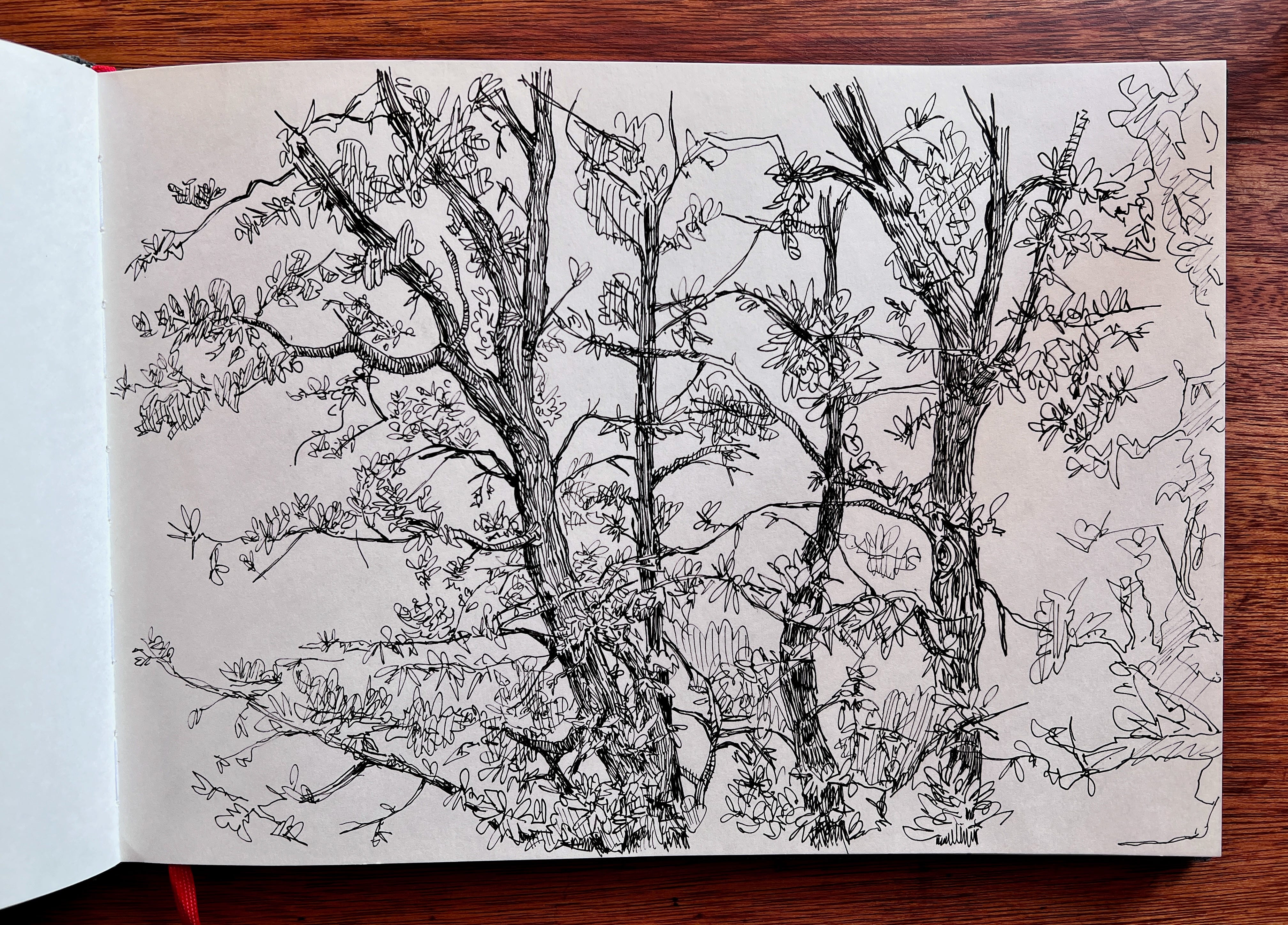
So I make a mark. My pen drops onto the upper left, it doesn’t much matter where. A little speck of ink. And the terror of the blank page flicks off, because there’s no blank page anymore. There’s just a page with one mark on it, and the squeak of a second mark begging to join it.
The first mark anchors me, but it doesn’t lock the door. Sure, I could lay down a faint pencil ghost of the whole tree first, if I’m feeling unsure, and adjust as I go — rough out major shapes, then layer a bolder line on top of a timid one, let the second round of decisions fix the first. Or I can just skip the planning stage and jump in, confidently laying down the contour of a single branch and see what it suggests comes next.
Typically, I skip the plan. I draw that one branch and let the next one grow off it. The leaves sprout out of the branches. The tree unfurls a line at a time, and it feels like taking dictation.
There’s no one way to grow a tree — or to draw one. The more I look, the more I see its individuality. My one job is to shed my preconceptions and slow way down. To take the time to know this tree from its friends, to look for the woodpecker scars and desert winds that sculpted this tree. This elm has thrown its weight to the left, pulling away from its neighbor’s shade. One branch is withered, its leaves browning. I can see where the flood-irrigation water flowed by which way the tree roots grew.
Now the tree fills the page — but still in just two dimensions. So I go back in to find the third, thanks to the fourth. The more time I spend watching and recording, the deeper and truer the drawing becomes. I find shadows to deepen and edges to refine. A fuzzy shape turns into the junction of three branches, ten leaves, a dozen twigs.
And as I push my way into the leaves, I lift off the ground.
That’s the part I do this for. The flow. The committee in my head — the one that narrates and worries and keeps score — has gone back to the house. I don’t notice it leaving. I just look up eventually and realize it’s been gone a while, and I’ve been happy. Calm, wide awake, not judging a thing. Each problem the drawing hands me opens into three or four decent answers instead of one wrong one.
The only question left is the dumb one. How do I know when it’s done? What if I go too far and wreck it?
I’ve learned not to care. It’s just the flow clocking out — a tap on the shoulder that says I’ve reached a place where I could stop, if I want. Not that I have to.
Because I’m fairly sure I can’t wreck it. Not really. I could keep finding things to add until I’d filled the whole page with solid black ink, and as long as the current’s still running — from the tree, through my eyes, down my arm, onto the paper — it isn’t ruined. It’s just still going. The journey’s the thing; the page is just a creased map of where we’ve been.
Or I stop because the tea’s gone cold and there’s a call I have to take, and I can close the book on a half-drawn tree and go back to my desk. That’s allowed too.
It’s like taking a walk. Some mornings I circle a few blocks, then home, dogs emptied, breakfast calling. Some mornings I walk around the Biltmore circle, then loop out along the canal, heading west without a deadline, five miles out before I turn around. The turnaround doesn’t spoil the walk, and where I started doesn’t get to decide where I stop. They’re just the two ends of a path I was on for a while.
I cap the pen, close the book. And I’m a little more here than I was an hour ago.
Your pal,
Danny
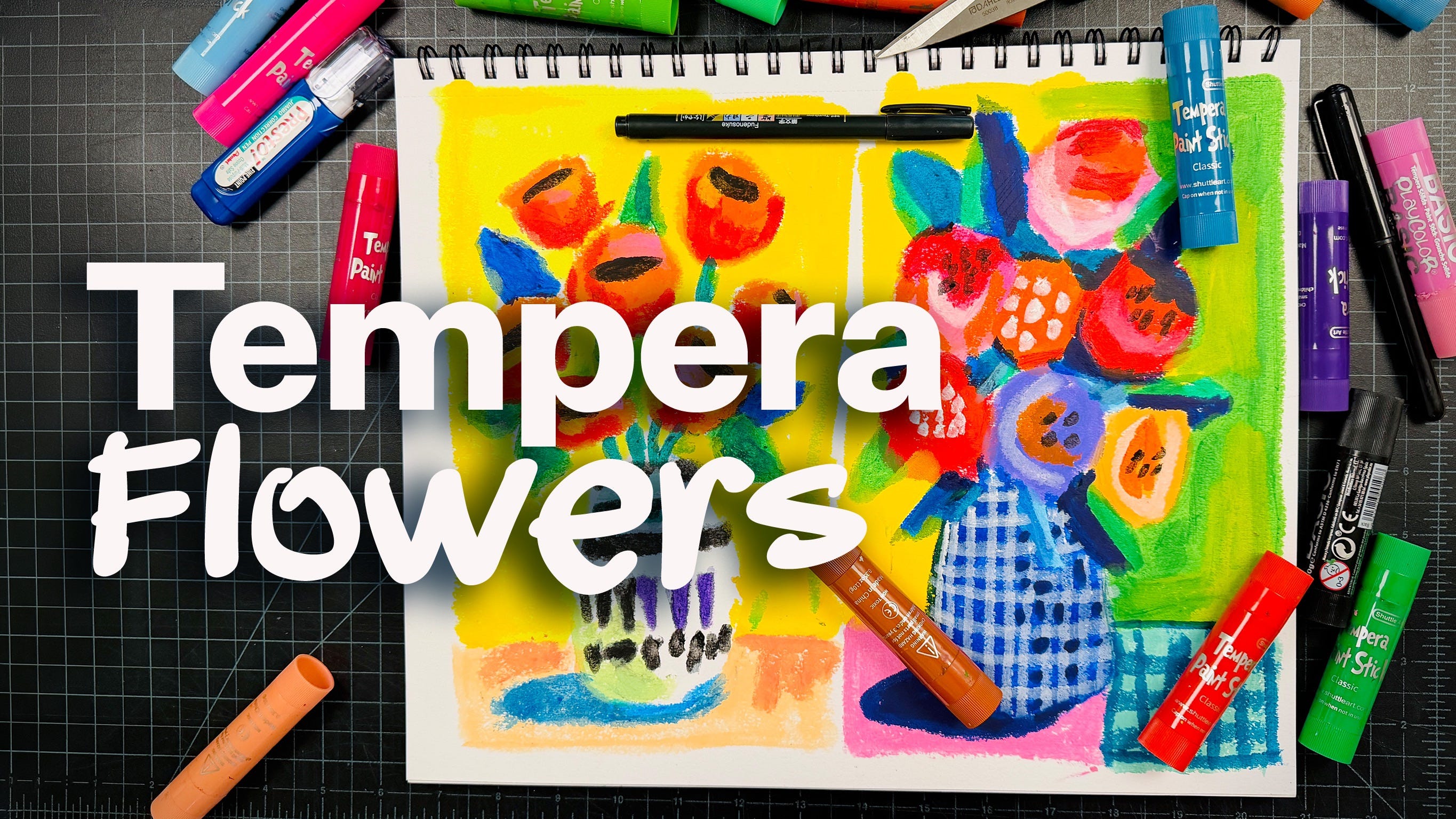
P.S.: This is the last time I’m going to mention what I think is the best workshop I’ve made so far: Tempera Flowers. If you hurry, you can probably still squeeze in, but we’re going to be kicking off at 9 am tomorrow morning. If you can’t make it live, you can still watch the recording, but if you don’t sign up, all you’ll have left to do is kick yourself.
Your writings and art always make me more than I was before. Thank you. Les
We've been together a long time now Danny. When you suggested drawing with a fountain pen (15 yrs ago?) I didn't know paper, pen and ink would absorb anxiety, alter mood and open up an amazing world of art. Your books inspire me and your chats are part of my day. How lucky I am to know you. You have a great sense of humor, too. Thank you for all you do. You're my hero! Nina, waving from (smoky)Toronto