

This might be a weird thing to say, but sometimes I miss the pandemic.
Not the horrible parts — the fear, the death, the not knowing. But I miss things about it.
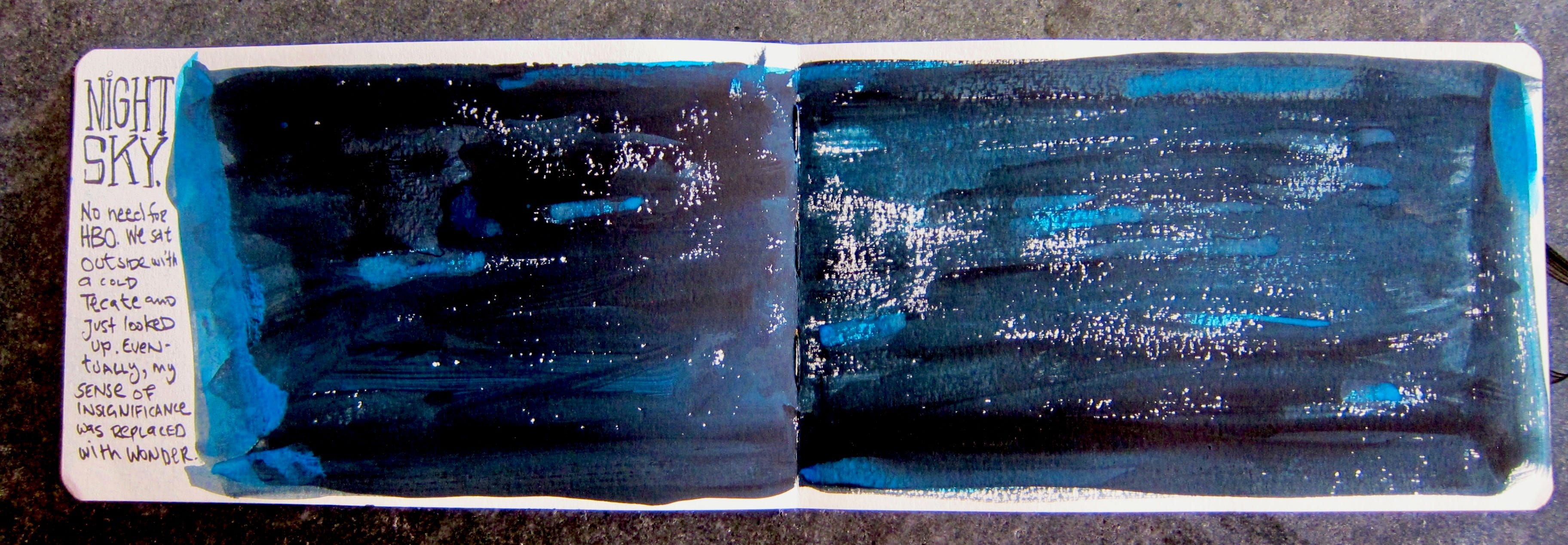
A certain tranquility. Sitting in my garden. Floating in my pool at night, looking at the stars so bright and vast.
The sense that this was a time of epic change, that rhythms and patterns were disrupted, that we could reconnect with what truly matters, that anything might be possible. We could learn to bake bread, to draw, to play the piano, take up knitting, read Victorian novels, do a hundred push-ups a day. We could spend an hour on Zoom talking to friends in New York whom we hadn’t talked to properly in years.
I heard that for the first time in a century, people in India could see Mount Everest. The air pollution had cleared. From hundreds of miles away, the mountain was just suddenly there. That amazed me.
There was a tremendous togetherness to it — literally every person on this planet was experiencing the same thing at the same time. It seemed, briefly, to ease the divisions between us, to remind us that we have so much in common, we are all human. It gave me a feeling of love for my species that’s much dimmer these days.
I watched the birds in my garden and thought: they’re completely unaffected by this. Just doing what they always do. Not afraid. Just living. I knew I was anthropomorphizing — birds live with the constant threat of being eaten — but I couldn’t shake the feeling that they’d escaped something that had paralyzed us. That they were in on a secret we’d long since forgotten.
And I remember feeling awed by science and technology. That they found a vaccine as quickly as they did. That millions were saved. Another example of the miraculous times we live in, even when we can’t quite believe it.
Writing about it now, six years on, I realize almost all of these things are still within reach. I could listen to the birds. I could draw with friends. I could call people in New York. I could read Tolstoy. I could feel all of it — and yet most of it I won’t.
I’m writing this while a war is raging and the news is full of warnings about artificial intelligence — how it will end work, or democracy, or the species. And I’m having the same thoughts I had during COVID. The same ones people must have had during the Spanish flu a hundred years ago, a pandemic so vast it killed tens of millions and then was simply forgotten. Not processed, not learned from. Forgotten.
When COVID began, I couldn’t stop thinking about that. How is that possible? And yet here we are again — the same catastrophes, the same inadequate responses, the same helpless shock as though none of this has ever happened before.
The reason, I think, is that we each believe — secretly, stubbornly — that our moment is different. That the lessons of the past applied to those people, in those simpler times, but not to us. We are more sophisticated, more informed, more imperiled than anyone who came before. This time the stakes are genuinely existential. This time we might not make it.
Except that every generation has thought this. Every generation has been certain that theirs was the hinge point, the moment of no return, the war to end all wars. And so far — so far — they’ve all been wrong.
We are so smart. We write everything down. We publish books, make films, hold memorials, build museums. We talk about never forgetting. And then, more or less on schedule, we forget — because remembering would require admitting that we are not exceptional. That we are just the latest version of the same animal, making the same mistakes, feeling the same dread, and somehow, improbably, carrying on.
And yet — no matter how dark things get, no matter how many times we have to be dragged back to the same hard lessons — we can still see the mountain. We can still hear the birds. We can still draw the beauty of ordinary things. We can still float in a pool at night and look up and feel, for a moment, that it’s all somehow worth it.
That’s not nothing. For a species as hopeless as ours, that might even be everything.
I love mankind. But alas.
Your pal,
Danny
P.S. I just published a new video. I think you’ll like it if you like sketchbooks — and who doesn’t!
Beautifully written and, yes, the Covid period was a time when it felt we were all somewhat sharing the same experience all over the world. It felt like we were coming together in spirit because of an awful pandemic. And look at us now. Feels like we are more divided than ever, not just in our country but in our world. It is a very scary time, just in a different way. I love your image of looking up at the night sky. Maybe we all need to do more of that and realize we are all still connected on this planet!!
Danny, I’m so glad that was your Covid experience. I gotta say, this registered nurse/artist wanna-be really envies that. Your other observations- completely agree and have shared all along. Now, let’s go call our friends!