

On a recent episode of my YouTube show, Draw With Me, I played some music by a band I happen to love. Some people responded immediately with comments to the effect, “Nah, I don’t like jazz. I’m outta here.”
At this, I got my back up—and it’s not just because I do love jazz (well, most jazz — except for Fusion, Pop Fusion, Neo Bop, Free Jazz, Acid Jazz, guitar jazz except Django, and anything recorded after 1985).
I ranted on for a while about how we should open our minds, try new things, wonder why others like them, and that’s what artists do. Oh, and also that it’s good for your brain and helps you be a less intolerant curmudgeon.
I guess this little rant shows that I’m intolerant of intolerance, but my critique is really of myself: the things I don’t want to do, the ways I don’t want to think. And yet I do.
It’s an ongoing struggle to expand my mind and keep it open.
There are a lot of things I used to think I’d always hate but now I’m willing to tolerate—or even enjoy. For most of my life, I could never abide any spectator sports, but now I’m willing to watch hours of tennis or Formula One racing or the Tour de France. I still can’t sit through a football game (but I did just get Chuck Klosterman’s new book on football, and I’m hoping that he’ll persuade me that I should enjoy this incredibly popular sport).
And that’s the thing: there is so much stuff that is popular that I just don’t understand. Why do people watch basketball, eat Domino’s pizza, drink IPAs, or read multi-volume science fiction novels about imaginary civilizations? Why do they wear baseball caps all the time? Why do they listen to K-pop?
It’s easy to say that people are idiots or pseudo-intellectuals or from another generation. But almost none of that is really true, and I think by and large it’s just an excuse to not push myself.
My brain is designed to put things into categories. It just makes it so much easier to process the insane amount of information that I’m constantly being bombarded by. Life is easier when I can say, “This is the thing I like and agree with. This is a thing I reject.” But the sieves and filters built into my brain are not always precise. And my crude categorization can end up blocking opportunity.
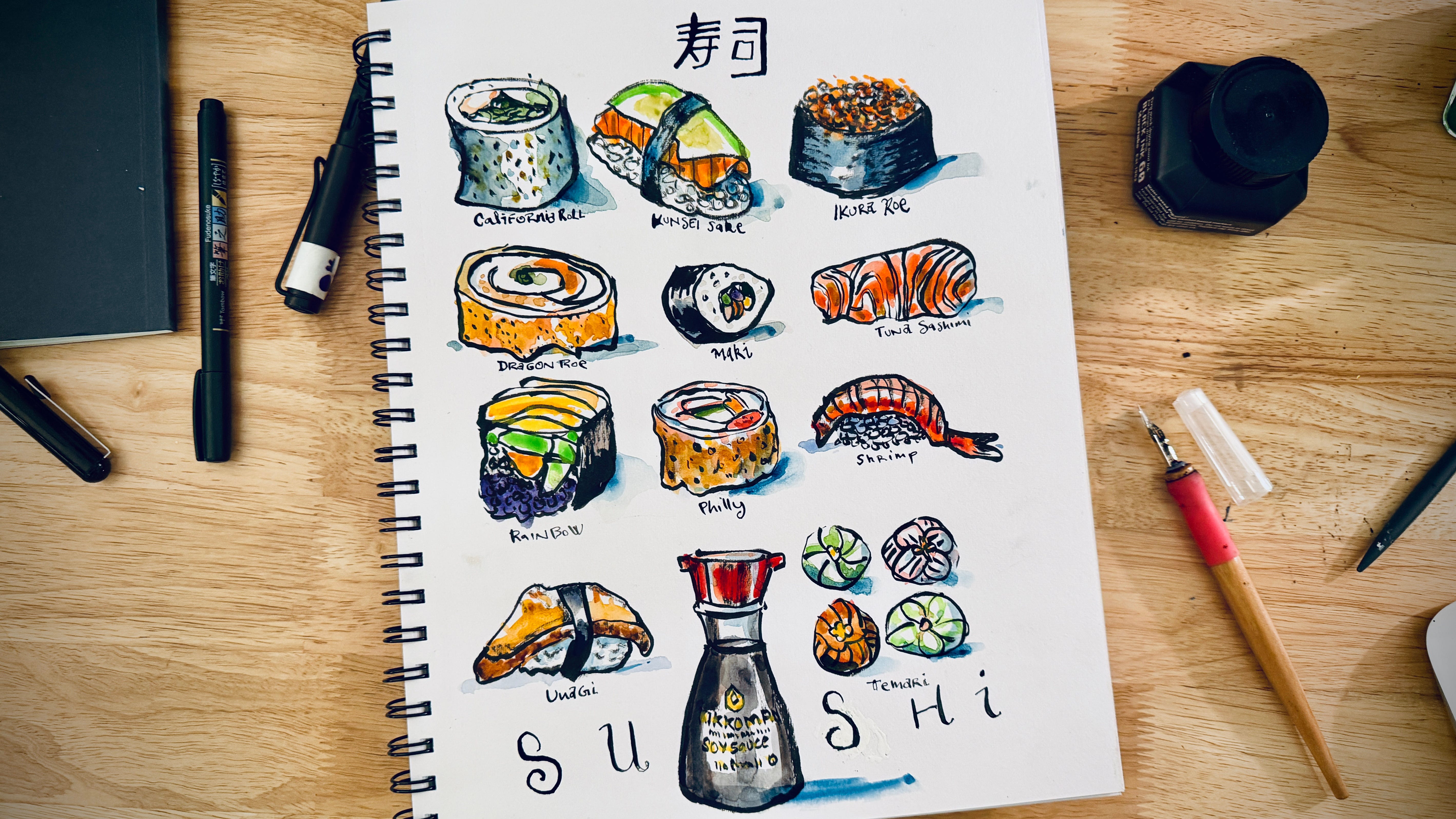
It’s tempting to just opt for the comfortable and familiar every time: to curl up with Seinfeld reruns, crack a Bud Lite, and tuck into a tuna on rye, avoiding the risks and stresses of the New. There was a time when the idea of eating raw eel was gaggingly incomprehensible, but had I stuck to my guns, I would never have discovered the silky pleasures of unagi nigiri and dragon rolls.
There seem to be two primeval evolutionary mechanisms in conflict in me when I have to decide to order the usual or try the special of the day. On one hand, I was wired by my ancient ancestors to avoid eating that new plant sprouting outside the cave or getting too close to that unfamiliar creature who had just stepped out of the bushes. The wrong choice could poison me or turn me into someone else’s lunch.
After the pandemic waned and we were allowed to start traveling again, I just didn’t want to. It’s taken me a couple of years to get comfortable with the idea of leaving my safe, isolated house and rubbing shoulders with people who don’t wash their hands or wear masks. I think that’s pretty instinctual: as an animal, I became pretty absolutist in protecting myself.
But on the other hand, all my ancestors eventually wandered out of Africa and began the globe-trotting adventure that spread our species around the planet. If we were pathologically averse to anything new, we would have stayed home and starved on the savannah rather than writing essays in Arizona.
When I try something new, I’m taking on work. I have to read the instruction manual. I have to pay close attention. I have to put up with stuff that my habits and instincts label as annoying or hateful. And I have to be ready to faceplant.
And after the initial excitement begins to fade, I get fidgety and irritable. I get whiny, like a six-year-old being dragged through a department store. I could suck at this! I probably will! I want to stop and go back to something familiar. That’s normal, but it’s also a critical crossroads. If I let myself, I can just quit—or I can push through and get to reap the benefits of this new experience.
And the benefit isn’t just getting to not suck at this or that. It’s to get brave.
The more I do new things, the more comfortable I have to become with being uncomfortable. I develop toughness and resilience. Which means I can push myself into even more uncomfortable places. It’s a sort of masochism that can lead to greatness. Or at least a willingness to eat raw eel.
I tend to be a snob. I assume reflexively that if something is popular, it’s probably not for me. But if a lot of people love something, that’s actually information. Their enthusiasm is worth investigating, not a reason to look the other way.
Because I was a teenager in the late 70s, I had a natural antipathy toward Bob Dylan. All that late 60s, early 70s stuff was crap for those of us who had discovered punk and new wave. Hippies were so passé. Then, when I was in my late 30s, I met Bob Dye. I thought Bob was a cool hipster, so I was kind of shocked when he revealed that he was a huge Bob Dylan fan (and not just because their names are so similar). Bob had no patience with my dismissal of his hero, and he insisted that we sit down and listen to all of Highway 61 Revisited and The Freewheelin’ Bob Dylan and then talk about it. Two hours later, I was convinced, and I’ve been an ardent Bob Dylan fan ever since.
Bob—well, both Bobs—opened my mind, and it stayed ajar.
Since then, I’ve had JJ school me in why I should listen to Rush and read Edith Wharton. My pal Anthony has turned me on to Robert Fripp.
Every time one of my prejudices falls, I rise.
I read a great book (Get the Picture by Bianca Bosker) that introduced me to this way of approaching new art in a gallery: “Just walk up to a piece and try to think of five things that it brings up… Not five things that the art is about… What are five things you notice… or how it makes you feel.”
Now I’m willing to ask myself: what’s the value in a Pollock? What are all these weird, incomprehensible things in the Whitney Biennial? Why do people rave about David Foster Wallace? Why would anybody eat beets? What’s so great about living in Phoenix, Arizona?
Asking people why they love what they love can help me share the love—or at least help me understand them better. The Grateful Dead. The Dave Matthews Band. Cilantro. Running marathons. The NHL.
I get it, but I still don’t like it.
I’m pretty good at trivia contests. I have yet to earn any money on Jeopardy, but all this random information in my brain has been enormously helpful to me in many other ways. I know it’s helped me come up with ideas because I have a large inventory of so many ways of doing things. I can combine them in fresh combinations to solve any greater problem. They call it ‘bricolage.’
That’s what creativity is: it’s not sitting in an empty room staring at the ceiling and hoping the muse will deliver an idea. It’s taking existing things and gluing them together to make new things out of them.
Of course, if I don’t know about a lot of existing things—because I have a very small repository of raw materials and eat all my meals at Arby’s—it’s that much harder to find fresh combinations. It’s like having a toolbox with one Phillips-head screwdriver and a ball-peen hammer. I’m working on getting an entire hardware store into my skull.
Which brings me back to jazz. I assume a lot of people are used to thinking of jazz as maybe instrumental background in a restaurant or an elevator or a Charlie Brown Christmas. Or perhaps they have recoiled at the clashing sounds of free-form jazz like Miles Davis’s Bitches Brew. Or been bored by the banality of Kenny G.
Jazz is often treated as esoteric or “for intellectuals” now, but from the 1920s through the 1950s, jazz was just mainstream popular music. From the Jazz Age of the 20s up until the explosion of rock and roll—much of which evolved from jazz—that’s what you heard on the radio and what you played on 78s. Jazz. Billions of people listened to it, and they weren’t all bores and intellectuals. (If this piques your interest at all, start with the New York Times’ great series called “5 minutes to make you love Jazz.”)
Jazz is an incredible opportunity to hear artists create something in real time. Take someone like Keith Jarrett, whose four-record set The Köln Concerts is just a recording of him sitting down at a piano in front of a room full of people and making up music for several hours. The music is beautiful, new, and very moving.
Most jazz is about playing with variations on something familiar. It begins with a standard song, like “My Favorite Things” or “Surrey with the Fringe on Top.” One artist—with a huge range of experience in making sounds with their instrument, a lot of understanding of musical theory, and a sense of comfort and freedom and trust in their bandmates—will start to dismantle that familiar song and create something brand new out of the pieces. Another member of the band will build on this with new variations, and the tune will continue to get passed around as new ideas develop and the whole group supports this creative exploration. It’s wonderful to hear: something really familiar becoming something brand new, and the audience is right there at the inception.
I have a box set of Miles Davis and his quintet playing live at the Plugged Nickel, a small Chicago nightclub, in December 1965. They performed there for two nights, playing seven sets, all of which were recorded. In each set, they play the same basic list of songs, but each take is a completely different experience for them and for us.
I can’t think of another art form that’s so bold and courageous, and that inspires me on creative adventures of my own. You can hear all seven hours on Spotify. Or YouTube.
The older I get, the more important I think it is to keep stretching. My body and my mind.
As Kevin Kelly says in his wonderful book, Excellent Advice for Living: Wisdom I Wish I’d Known Earlier, “the chief prevention against getting old is to remain astonished.”
Sure, as I get older it’s tempting to be more conservative and guarded, to be suspicious of strangers and new ideas. After all, I have fewer years to recover from grievous errors.
On the other hand, I have fewer years in which to grow and have fun. New ideas and experiences are like investments that will grow over time. Each one spawns others, and eventually I get more and more wealthy from these experiences. The longer I wait to try stuff, the less I’ll be able to benefit from it.
And there is less at stake than there was when I was twenty. I’ve also shed much of the arrogance that I had when I was younger, the cocksureness that I was always right. Now I’m more open to how other people think and live. I’m less afraid of looking the fool.
I learned a few new things this week: I planted grass seed in my yard for the first time. I invited a fellow baker to come over and teach me some sourdough techniques. I read a book about surfing. I listened to a new record by an old favorite (Morrissey) and an old record by a new favorite (Surprise Chef).
That’ll do. Time to watch a rerun of ER.
Your pal,
Danny
P.S. I just made a video about how I learned the true meaning of creativity. I hope you like it!
Two things I promised myself I would study or somehow develop an appreciation for when I retired, that I still haven't: SHAKESPEARE and MOZART! I just turned 70, so I guess I'd better get my ass in gear. I ain't gettin' any younger!
And just what is wrong with multi volume science fiction epics??????
This is a really interesting post and I agree with so much of it. It’s so easy just to stick with the things that I know I will enjoy whether it’s food, travel or books. I do make myself do new things though and have discovered so many new things that I love.
Aging doesn’t help though. As I get older and become more aware of how few years I might have, I become more reluctant to really explore new things as I don’t want to waste the time I have on things I might not love. Curiousity often wins out though