

At some point in your drawing life — and it doesn’t matter whether you’ve been at it for six months or six years — you’re going to hit a wall.
And I don’t mean the wall where everything looks terrible and you want to quit. That one usually pops up within a few days of starting to draw and it’s almost cozy in comparison, because at least you know what the problem is.
No, the wall I’m talking about is the one where you open a sketchbook from six months ago, lay it next to what you drew this week, and you genuinely cannot tell the difference. Same types of lines, same problems with hands or noses or perspective or mixing colors, same degree of progress.
Oh, you’ve been working. You’ve been showing up. But nothing seems to be developing anymore.
That’s a plateau. And it seems to stretch, flat and unvarying, out to the vanishing point you can’t seem to quite understand.
And the monkey — your inner critic that’s always looking for evidence that you should give up — the monkey loves this moment. “See? This is as far as you’re gonna get. This is just who you are. Mediocre.”
So let’s talk about what the heck is going on and what we are supposed to do about it.
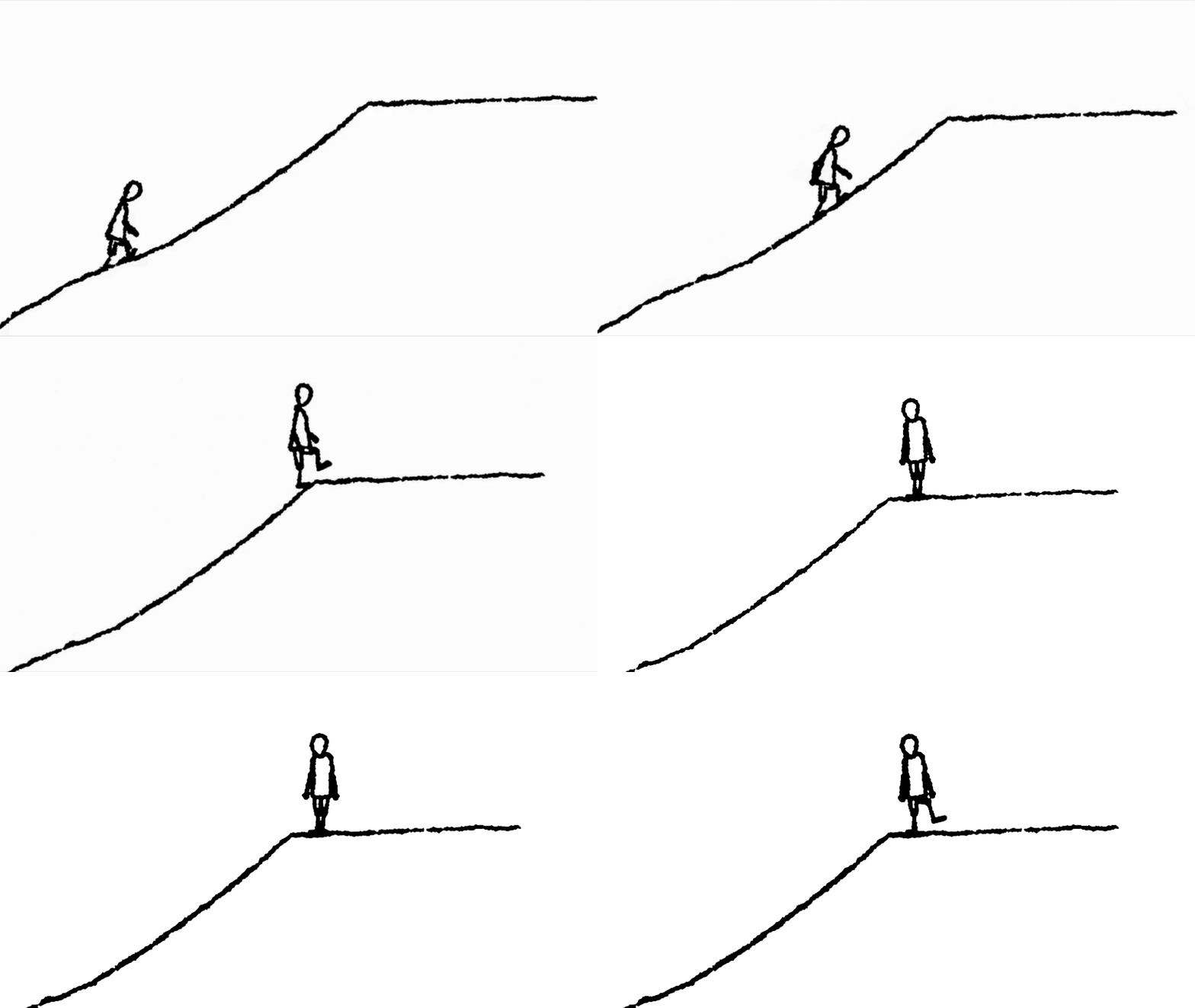
Your brain is a pattern-recognition machine. When you’re learning something new it’s working hard. Building new connections, burning energy, making mistakes, figuring things out. That effort has a feeling to it — the feeling of getting better.
And then at some point your brain gets efficient at doing the things, drawing, driving, baking bread. It files away what it’s learned. The things that used to take enormous concentration — seeing negative space, getting proportions roughly right, not death-gripping the pen — all of that becomes automatic. Your brain has basically said: got it, sorted, what’s next?
Which is great, except that “what’s next” is your job to provide. And if you don’t give new instructions, the brain just keeps running the same efficient programs. Same drawings. Same results. Same wall.
The plateau isn’t a sign that you’ve reached the end of the road. It’s just your brain on cruise control.
The obvious response to a plateau is to work harder. Draw more. Practice more. Push through.
Makes sense. That’s what worked before. So when progress stalls, doing more of the same feels like the right answer.
But doing more actually makes it worse. Your brain is already efficient at what you’ve been practicing. More repetition just deepens the groove you’re already in. You’ll get very, very good at exactly what you already know, and nothing else will move.
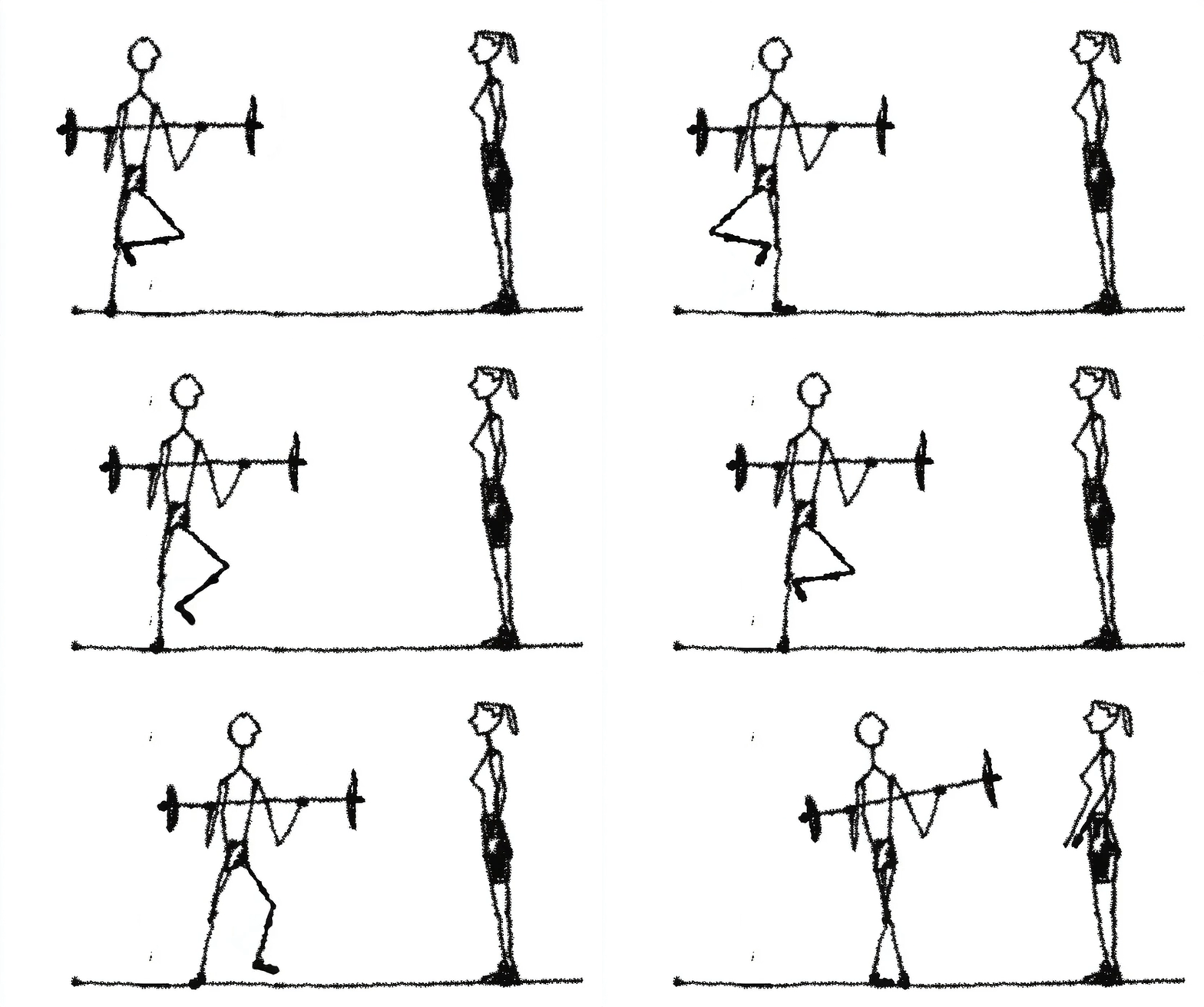
I work out twice a week with Jenn, my trainer. Every month, she gives me a completely new program — different equipment, different focus. “This month, we’re working on hip mobility. These exercises work together to build balance and strength.” And I show up Monday, and there’s a whole new set of things I can’t do properly yet.
Sometimes she’ll have me do an exercise where I couldn’t possibly use the weight I’ve been lifting. New movement pattern, different muscles, have to start lighter. It feels like going backward.
But as Jenn explains it, I haven’t lost what I used to be able to do, I’m just starting at the bottom of something new. We’re targeting different muscles, and now those new muscles are growing. New connections are getting made. And when I go back to the original exercise, I’m stronger than I was before. What felt like a setback was actually the whole point.
Drawing works the same way. This will feel counterintuitive, so trust me for a sec: to get past a plateau, you have to temporarily go back to being bad at something.
Not bad at everything. Just bad at something new. Anything.
We sometimes hit a plateau because we know better. Our expectations of what we think we should be able to do becomes a real burden. You know what a good drawing should look like, and you keep trying to make that drawing, and you never go anywhere new because new means uncertain and uncertain means the monkey wins.
Give yourself ten pages — or a week, or a month — where the only rule is that you’re in your discomfort zone. No showing anyone. No standards. No posting to social media with self-derisive comments. Just experiments that take you into new territory.
There are lots of ways to try this. A different medium you haven’t used. A constraint that takes away your usual tools — draw only in one color for a month, or give yourself three minutes per drawing and stop there, regardless, or draw everything with your left hand for a week. Your usual drawing muscles won’t help you. You’ll have to build new ones.
Pick an artist whose art makes you slightly uncomfortable or confused. Spend a week with their work. Try to steal just one thing about how they see. Do it for a little while, and you’ll be sowing seeds that will show up in your work months later in unexpected ways. You’ll be looser. You’ll be more confident. You’ll be doing something different and you’ll have bulldozed over that hump.
A plateau is only invisible progress.
So pick up the lighter weight, lift it from a different angle. Challenge yourself to be a beginner again, to be bad again, to be different, to wander off the beaten path, into the weeds and find another upward route. Trust yourself to grow.
Your pal,
Danny
P.S. If you want to try something new on May 16, join me in Paris. Kinda. I’m doing a live online workshop called “A Day in Paris,” and we’ll be seeing all the sites and creating a big illustrated journal spread capturing it all, and you can do it right from home. Get off the plateau and come to Paree with me. Find out more here.
This was very insightful. I set a 2026 goal of seeing if I could learn to play piano at a reasonable beginner level in one year, practicing 30-45 minutes each day. So far, each month has only illustrated how much I DON’T know. But I keep in mind a sentence from one of your early books… what if you put the same effort into drawing that you put into learning to drive a car? So, thanks for reminding me that obstacles like plateaus (and clumsy fingers) are part of the growing process.
You gave excellent science-based explanations for why we can get stuck in a rut. I appreciate your suggestions for how to grow our art by build new connections and pathways in our brains.