

I’m writing this essay in ten minutes while I walk my dog, transcribing straight into my phone — not to rush through this, but because constraints help me get things done and often done better.
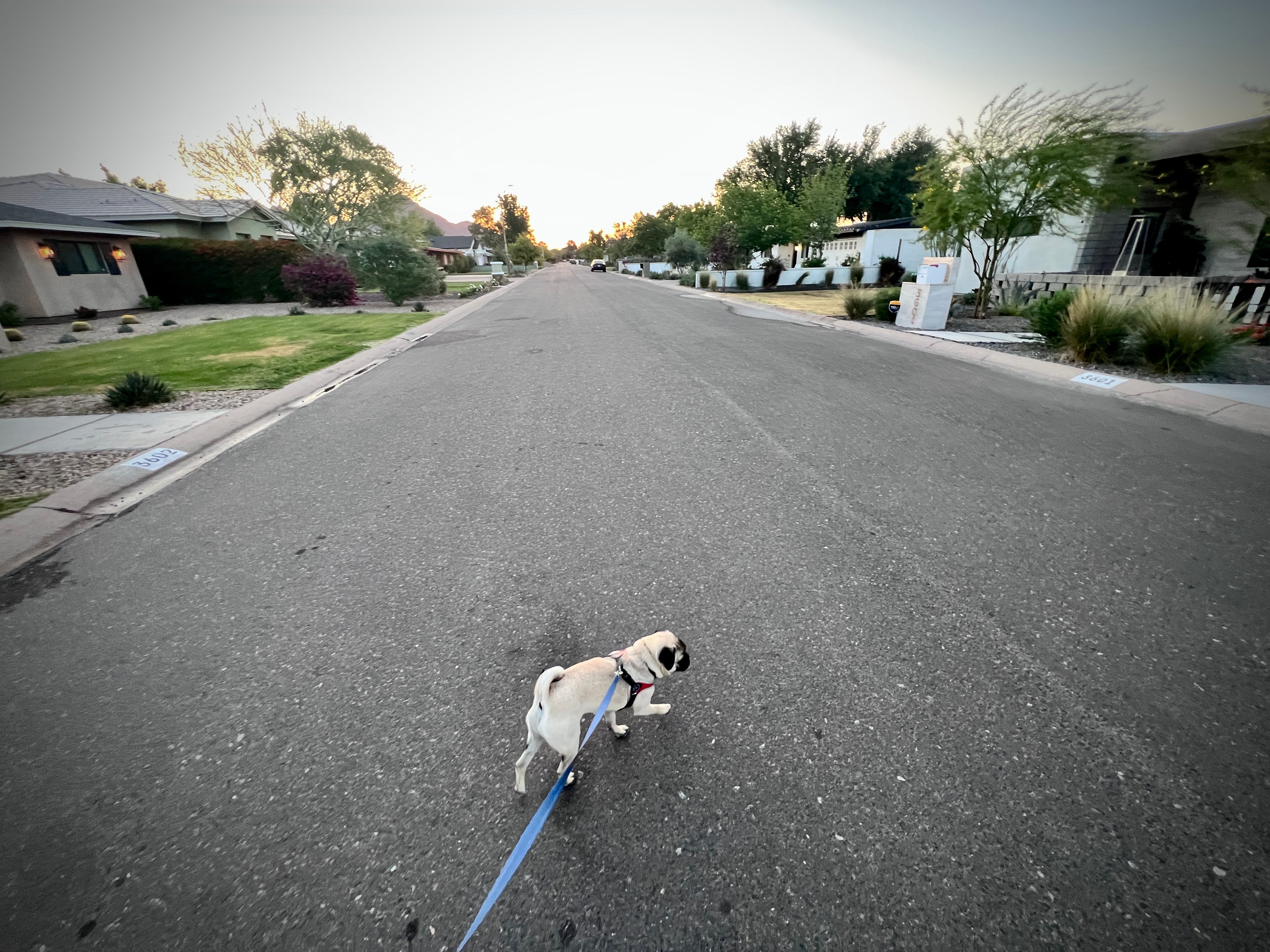
When I tell myself I have a week to write something, I’ll dither. I’ll procrastinate. I’ll rewrite the same paragraph five times, and doubt slithers in. But the moment I say “you have ten minutes, starting now,” I’m off and running. I stop thinking about whether it’s perfect.
I just think, and the thinking becomes the thing.
We have this myth that real art requires real time—long, uninterrupted blocks where we can disappear into the work. Big beautiful stretches of nothing but us and the blank page.
Weekend workshops, sabbaticals, cabins in the woods.
And maybe that’s true for some people. But I’ve found the opposite. Most of the good work I’ve done came in the little spaces between other things. Five minutes waiting for coffee. The walk to the car. Notes jotted down while brushing my teeth. I’ve written a dozen books this way, and every one of them was built from moments I almost didn’t count as real time.
Whether it’s a restricted palette of three colored pencils or ten minutes on the clock, the boundary creates a direct line to the end. There’s no room for overthinking.
If I break my working day into little slots—thirty minutes for this, twenty for that—and I’m intentional about what goes in each one, my days become rich instead of vanishing between my fingers. It doesn’t all have to be “work” in the sense of output. Fifteen minutes learning something new. Twenty-five minutes napping. Thirty minutes with a book and not my phone.
I’m choosing what happens in the in-between spaces instead of letting them evaporate into nothing. The enemy is long chunks of undifferentiated time, hours with no shape. That’s where procrastination lives, where the small voice tells me that conditions need to be perfect before I can begin.
The other half of this is environment. When I sit down to draw, the materials I need are there at hand in a little IKEA cart. Not dried- up tubes of paint lost in a dusty closet that require archaeology to dig up. I have a list of essay topics I could write on. I have a bunch of ideas for drawing projects. I don’t have to stare at the wall, wondering what I’m supposed to do. The work is already prepared. The thinking has been done.
And sometimes I’ll just say, I’m going to spend 20 minutes drawing random things I pull up on Google Images. It doesn’t have to be a big project, just the fun of making something new.
So if you are in a constant quest for time, let me remind you — you already have it. You have the five minutes before a meeting. You have the walk to the car. You have the margins. Stop waiting for the perfect moment and start using the moments you have. Give yourself constraints. Fill the small spaces. Prepare your tools. And then watch what happens.
The work can be smaller than you think. And it can still add up to big things.
Okay, I’m walking up my driveway now, and my 10 minutes are up. See you next week.
Your pal,
Danny
What a great article. I keep telling myself that I will get to my art when I finish this or that, declutter the whole house, etc. Two and a half years have gone by with no new art produced at all. I’m starting again NOW. Even if it’s only for ten minutes. Thank you for your essays. They are meaningful and encouraging.
Debra in Kansas
Great essay Danny - thanks for that much needed reminder!